
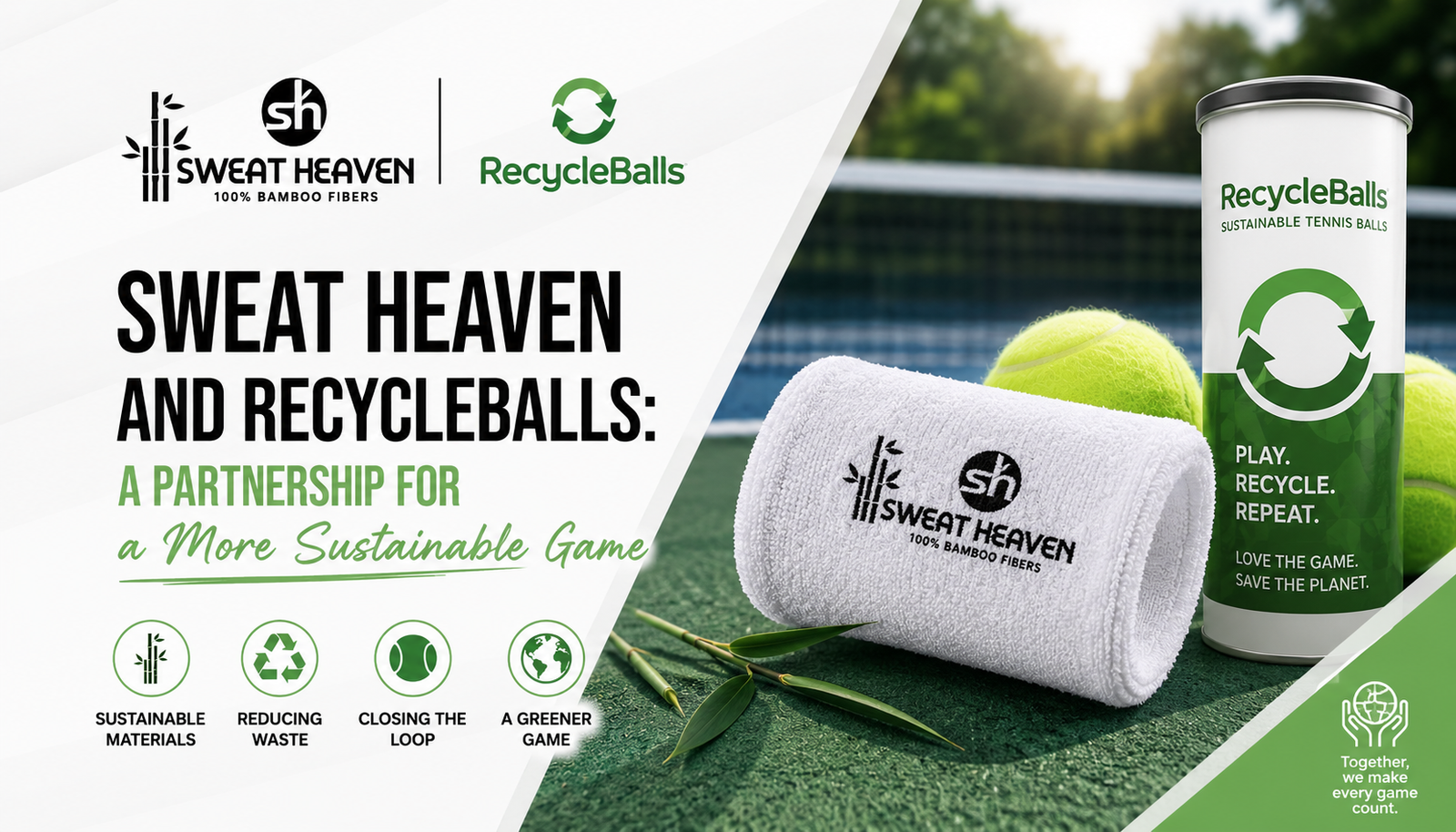
Tennis brings together competition, fitness, and community, but the sport also creates an environmental challenge that is easy to overlook. Tennis balls, athletic accessories, packaging, and other equipment can eventually become waste.
Creating a more sustainable future for tennis requires more than changing one product. It requires athletes, brands, clubs, and organizations to work together. That is the idea behind the partnership between Sweat Heaven and RecycleBalls, a nonprofit organization working to keep used tennis balls out of landfills and create recycling opportunities within the tennis community.
For Sweat Heaven, the partnership represents a natural extension of its approach to athletic accessories: helping athletes make more thoughtful choices while supporting a healthier future for the sport.
Why Sweat Heaven and RecycleBalls Are a Natural Fit
Sweat Heaven was built around the idea that athletes should have access to comfortable, functional accessories without overlooking the environmental impact of the products they use.
Founder Rosita Torres brings a personal connection to tennis and athletic performance. As a competitive tennis player, triathlete, and mother of a WTA-ranked professional, she has spent years around athletes and understands how frequently sports accessories become part of everyday training.
That experience encouraged Rosita to explore alternatives to conventional athletic accessories and develop products using bamboo fabric. Sweat Heaven now offers bamboo wristbands, sports towels, headbands, and head ties designed for active lifestyles.
RecycleBalls addresses another important part of the tennis equipment cycle: what happens to tennis balls after players are finished using them.
Tennis balls don’t last forever. Once they lose their playing characteristics, players and clubs need responsible ways to deal with them. RecycleBalls works with tennis communities to create recycling opportunities and increase awareness about what can happen to used tennis balls.
That shared focus makes the organizations a natural fit.
As Rosita puts it:
“We need to think organically. We need to make the world healthy and us healthy.”
The idea is simple: sustainability should be part of sports culture rather than something separate from it. Athletes can think about the equipment they buy, the materials they choose, and what happens to products when they reach the end of their useful life.
Supporting a More Sustainable Tennis Community
The Sweat Heaven and RecycleBalls partnership is designed to turn that philosophy into action.
Sweat Heaven is donating 5% of its online sales to support RecycleBalls and the programs and infrastructure behind its recycling efforts. This gives customers an opportunity to support tennis sustainability through their purchases while helping a nonprofit continue its work.
The partnership also focuses on education and awareness. Sweat Heaven can introduce its audience to RecycleBalls’ mission, helping athletes and tennis families discover that tennis-ball recycling is an option.
Players interested in learning more about the organization can explore the RecycleBalls FAQ, which addresses common questions about its recycling efforts.
Awareness matters because environmental action often begins with knowing that an alternative exists.
A tennis player might purchase a wristband because they need better sweat management during a match. Another might choose a bamboo towel because they prefer its feel and material. Those decisions can open the door to a broader conversation about how everyday sports purchases affect the environment.
The goal isn’t perfection. It is progress through more informed choices.
Bringing Sustainability Into Local Tennis Clubs
One of the most meaningful aspects of the partnership is its connection to local tennis communities.
Rosita noticed that her own club did not have a tennis-ball recycling program. Instead of treating the absence of a program as unavoidable, she saw an opportunity to create one.
This demonstrates how sustainability can begin at the local level.
A tennis club can establish a collection point for used balls. Coaches can explain recycling to junior players. Parents can encourage children to participate. Tournament organizers can make recycling part of their event planning.
None of these actions needs to be complicated. The important part is creating a system that makes the sustainable choice easier for players.
When one club begins recycling, its members can introduce the idea to other clubs, schools, academies, and community programs. A small initiative can therefore become part of a much larger tennis culture.
Why Athletic Accessories Are Part of the Conversation
Tennis sustainability isn’t only about tennis balls. The accessories players use every day deserve consideration too.
Wristbands, towels, headbands, and other athletic products are repeatedly exposed to sweat, washing, and physical activity. Choosing durable products and considering their materials can help athletes make more thoughtful purchasing decisions.
Sweat Heaven’s bamboo-based approach is one example. The company creates athletic accessories designed to combine comfort and performance with a different material choice.
For tennis players who need an accessory for managing perspiration during matches and training, Wristband Sweatbands are a practical part of a player’s equipment bag.
The broader message is that sustainability can involve many small decisions. Recycling an old tennis ball, selecting durable equipment, or supporting organizations working toward environmental solutions can all contribute to a more responsible sporting culture.
Making Earth Month More Meaningful
April provides a natural opportunity for businesses, tennis clubs, and communities to talk about environmental responsibility through Earth Month. But sustainability becomes more meaningful when awareness leads to practical action.
For Sweat Heaven, Earth Month is an opportunity to spotlight the RecycleBalls partnership and encourage athletes to think about what happens to the equipment they use. That could mean recycling used tennis balls, learning more about sports-product materials, or encouraging a local club to create a collection program.
Small decisions can become lasting habits when an entire tennis community participates.
Sustainable Choices Can Start With Everyday Gear
Sustainability isn’t limited to tennis balls. The accessories athletes use throughout a match can also become part of a more thoughtful approach to sports equipment.
Wristbands, towels, and headbands are repeatedly exposed to sweat, washing, and physical activity. Choosing durable products and considering their materials can therefore become part of a broader approach to responsible purchasing.
For example, players can use a Headband to manage sweat during training and competition while choosing an accessory designed for repeated athletic use.
For athletes interested in the role of bamboo wristbands in performance and sustainability, Sweat Heaven’s Guide to Buying Absorbent Bamboo Sweat Wristbands provides additional information about material, absorbency, comfort, and responsible purchasing.
How Tennis Clubs Can Join the Movement
The partnership also highlights an opportunity for tennis clubs to take practical steps toward sustainability.
A club doesn’t need a major environmental campaign to make a difference. It can begin with a dedicated collection point for used tennis balls, explain the program to members, and encourage players to participate.
Coaches can introduce recycling to junior players. Tournament organizers can make recycling information visible at events. Parents can encourage young athletes to think about what happens to equipment after it is no longer usable.
These actions can gradually turn sustainability into part of a club’s culture rather than an occasional initiative.
The same principle can extend to purchasing decisions. Clubs can consider durable athletic accessories that align with their values instead of treating sports merchandise as disposable promotional material.
A Partnership Built Around Shared Values
The strongest partnerships are often the ones that make sense before the agreement is even signed.
Sweat Heaven and RecycleBalls share a belief that tennis can be healthier for people and the planet. For Sweat Heaven, supporting RecycleBalls expands its sustainability efforts beyond the materials used in athletic accessories and into the wider tennis community.
For RecycleBalls, partnerships with companies and people within tennis can help spread awareness and encourage more clubs and players to participate in recycling.
Together, these efforts create something bigger than a single product or recycling bin. They create a conversation about how the tennis community can reduce waste while continuing to enjoy the sport.
Creating Change One Match at a Time
Sustainability doesn’t require athletes to stop competing or enjoying the game they love. It requires the tennis community to become more intentional about the choices surrounding the sport.
Sweat Heaven and RecycleBalls are working toward that kind of change through sustainable athletic products, tennis-ball recycling, financial support, education, and community action.
The partnership is also a reminder that meaningful environmental progress doesn’t always begin with a major initiative. Sometimes it starts when one athlete notices a problem at a local tennis club and decides that it should not remain a problem.
As the partnership grows, the hope is simple: more players will understand what happens to their used equipment, more clubs will explore recycling opportunities, and more athletes will recognize that their everyday choices can make a difference.
Because a sustainable future for tennis isn’t just about playing a better game.
It’s about leaving a better game behind for the players who come next.