
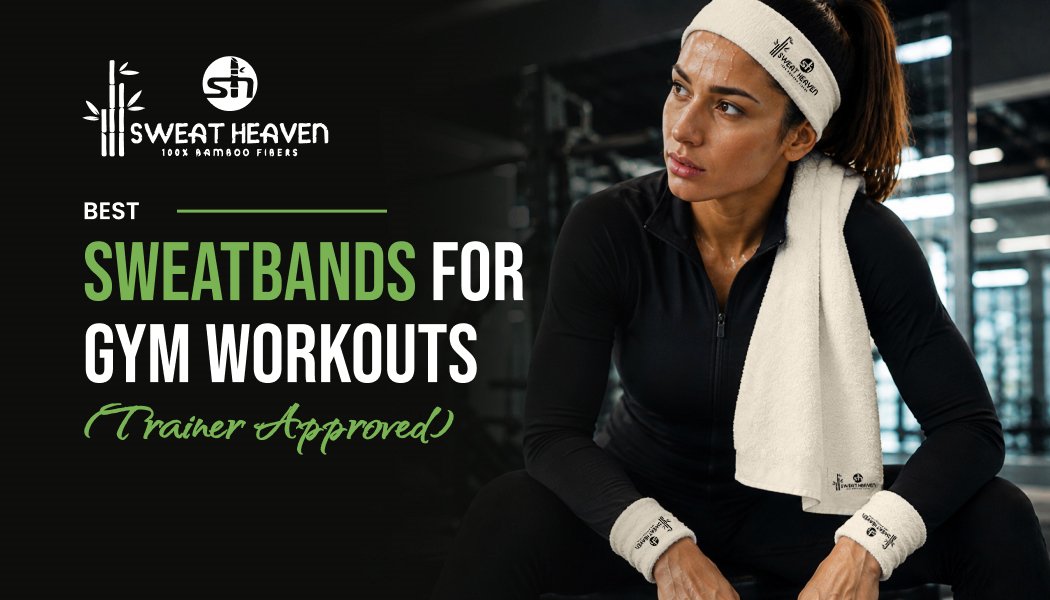
A sweatband can be a small but useful part of your gym bag. The right one helps manage sweat before it reaches your hands, equipment, eyes, or clothing. The wrong one can become uncomfortable, saturated, or difficult to keep fresh after repeated workouts.
For gym training, the best sweatbands are not necessarily the thickest or most expensive. Material, absorbency, fit, breathability, and construction all matter. If you also care about sensitive skin or avoiding synthetic materials, the fabric deserves extra attention.
What Makes a Sweatband Good for Gym Workouts?
Gym workouts create different sweat-management needs depending on the activity. Someone lifting weights may need moisture control around the wrists and hands, while someone doing cardio may want to keep sweat away from their face.
A good workout sweatband should stay securely in place without feeling restrictive. It should absorb moisture effectively and remain comfortable throughout your session. Fit matters too. A loose band can slide once it becomes damp, while one that is too tight can become irritating.
Construction matters for heavy sweaters as well. Sweat Heaven’s wristband sweatbands use a four-layer design, combining two outer French Terry layers with two inner fleece layers designed to wick and absorb moisture. They are also available in different sizes and lengths.
Bamboo vs. Synthetic Sweatbands
The fabric touching your skin can make a difference during a long workout. Synthetic fabrics can be lightweight and quick-drying, but some gym-goers prefer natural fibers because of their softness and absorbency.
Bamboo is one option worth considering. Sweat Heaven’s wristband sweatbands are made from 100% bamboo fibers, offering a soft, breathable option for managing sweat during training.
However, simply seeing “bamboo” on a label does not tell you everything about a product. If material safety and sustainability matter to you, check the fiber composition, certifications, and manufacturing claims.
Sweat Heaven states that its bamboo products carry GOTS and OEKO-TEX Standard 100 certifications. GOTS addresses organic textile production, while OEKO-TEX Standard 100 focuses on testing textiles for harmful substances. For shoppers specifically looking for non-toxic, plastic-free, organic products with certification, these details provide more useful information than a general “eco-friendly” label.
Choose a Sweatband Based on Your Workout
Your training style should influence the type of sweatband you choose.
For weightlifting, wrist sweatbands can help manage sweat that travels down the forearm and toward the hands. This can be useful when gripping barbells, dumbbells, cable attachments, and other equipment.
For HIIT and CrossFit-style workouts, absorbency and a secure fit become even more important. Constant movement makes a sweatband that slips or requires frequent adjustment distracting.
For treadmill running, cycling, and other cardio sessions, you may prefer both wrist and head coverage. A headband can help manage forehead sweat, while a wristband provides a convenient way to wipe your face without stopping your workout.
Arm sweatbands are another option for people who want coverage farther up the arm. However, if sweaty hands or grip are your main concern, a wristband is more directly suited to the problem. These same characteristics matter in other sports too, so if you are searching for the best tennis wristband, absorbency, fit, comfort, and construction are all worth considering.
What If You Have Sensitive or Acne-Prone Skin?
For people with sensitive skin, comfort should be part of the buying decision. A sweatband sits against the skin during exercise, often in a warm and damp environment, so softness and cleanliness both matter.
The same applies when choosing the best towel for acne-prone and sensitive skin. A soft material can feel more comfortable, but proper hygiene is equally important. The CDC’s guidance on MRSA prevention in athletic facilities recommends that athletes avoid sharing personal items such as towels and clothing, shower after exercise, and wash and completely dry workout towels and clothing after use.
A sweatband should therefore be part of your normal workout hygiene routine. Use a clean band for each workout and follow its care instructions. No sweatband should be treated as a medical product or as something that prevents a skin condition.
Absorbency Matters More Than “Moisture-Wicking”
“Moisture-wicking” sounds useful, but it does not tell you everything about how a sweatband handles sweat.
A fabric can move moisture away from the skin without necessarily absorbing large amounts of it. For gym-goers who sweat heavily, absorbency may be more important when the goal is to keep moisture away from the hands, face, or equipment.
ScienceDirect’s research examining sweat and odor in sportswear also highlights the relationship between moisture, textile materials, skin microbiology, and odor management. That is why it helps to look beyond a single marketing term. Consider the material, construction, absorbency, fit, comfort, and how easily the sweatband can be washed.
Why Bamboo Can Be a Different Choice
For gym-goers who prefer natural fibers, bamboo offers a combination of softness and absorbency that can make it an appealing alternative to conventional synthetic accessories.
Sweat Heaven describes its bamboo products as microplastic-free, which is relevant for shoppers specifically searching for no-microplastics options. When comparing products, however, it is still worth checking the manufacturer’s specific material information and certifications rather than assuming all bamboo products are identical.
The most useful approach is to consider the complete product: what fibers it contains, whether certifications support its claims, how it is constructed, and whether it suits the type of workout you actually do.
When a Sweat Heaven Sweatband Makes Sense
If you want an absorbent wristband made from 100% bamboo fibers, Sweat Heaven’s wristband is designed specifically around sweat management. Its four-layer construction combines French Terry and fleece layers, and different sizes and lengths are available.
Sweat Heaven also offers custom sports accessory solutions for gyms, trainers, clubs, and fitness organizations. Options such as embroidery and woven labels allow sweatbands to function as branded workout accessories as well as practical training gear.
For larger orders, gyms and fitness organizations can explore Sweat Heaven’s wholesale sports accessories for bulk options. Individual buyers can also use Sweat Heaven’s guide to buying absorbent bamboo sweat wristbands when comparing material, fit, and absorbency.
Make Your Gym Bag Work Smarter
The best sweatband depends on how you train. For lifting, prioritize absorbency, comfortable wrist coverage, and a secure fit. For cardio, consider whether you need wrist and head coverage. For longer sessions, softness, breathability, durability, and easy care become increasingly important.
Sweating itself is a normal part of temperature regulation, so the goal is not to eliminate it. It is to manage it comfortably so it does not become a distraction during training. The Cleveland Clinic’s guide to sweating explains why sweating is a normal physiological process and when excessive sweating may warrant attention.
For gym-goers looking for a soft, absorbent alternative to conventional synthetic accessories, a certified bamboo sweatband can be a practical addition to a training routine. For gyms and fitness organizations, customized and wholesale options can extend that same practical choice to an entire community.