
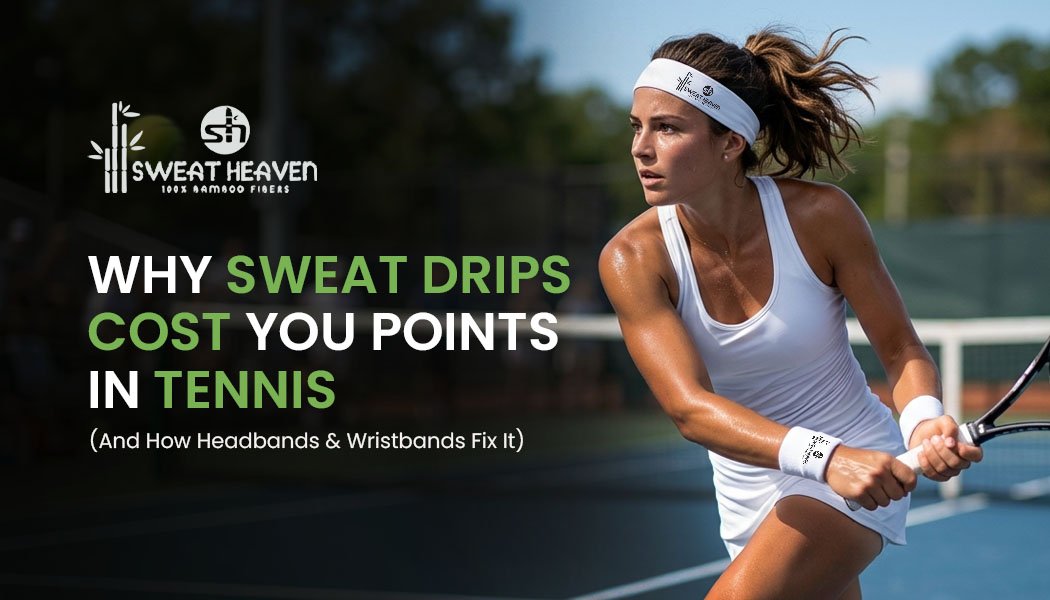
Tennis is a game of precision. A fraction of a second can determine whether you win a point or lose it. Players spend years refining technique, improving footwork, and sharpening mental focus. Yet one of the most overlooked performance killers is something completely natural.
Sweat.
At first, it seems harmless. It is simply part of physical exertion. But during a match, uncontrolled sweat can disrupt vision, weaken grip, and slow reaction time. These small disruptions add up quickly, often costing critical points.
The difference between amateur frustration and professional consistency often comes down to how well you manage these details. Understanding how sweat affects your performance and how simple gear like headbands and wristbands can fix it is essential if you want to elevate your game.
The Hidden Cost of Sweat in Tennis
Sweat does not just make you uncomfortable. It actively interferes with performance.
During a match, sweat typically accumulates on the forehead, hands, and arms. Without proper control, it begins to drip into the eyes or onto the hands holding the racket.
This creates three major problems:
- Blurred or interrupted vision
- Reduced grip stability
- Increased mental distraction
Tennis is built on quick decision-making. According to reaction time principles, even slight delays in processing visual information can impact performance in fast-paced environments. When sweat enters your eyes, your brain is forced to process discomfort before reacting to the ball.
That delay can cost you the point.
Vision Disruption: The Split-Second You Lose
Imagine returning a fast serve. Your opponent hits the ball at speed, and as you prepare to react, sweat drips into your eyes.
In that moment, you blink. Your vision shifts. Your timing breaks.
That is all it takes.
Even a split-second disruption forces you to reposition mentally and physically. In tennis, where reaction windows are already tight, this creates a measurable disadvantage.
Sweat dripping into the eyes is not just annoying. It interrupts the visual clarity required for tracking ball trajectory, spin, and bounce.
Grip Failure: The Silent Point Killer
While vision issues are obvious, grip problems are more subtle but equally damaging.
Sweaty hands reduce friction between your palm and the racket handle. This leads to:
- Slight racket twisting on impact
- Reduced shot control
- Inconsistent power delivery
- Increased risk of mishits
Over time, even minor grip inconsistencies affect confidence. Players begin to adjust their swing subconsciously, which further disrupts technique.
This is why many professional players constantly wipe their hands or adjust their grip during matches.
Mental Distraction and Performance Decline
Tennis is as much mental as it is physical. When sweat becomes a distraction, it pulls your attention away from strategy and execution.
Instead of focusing on:
- Shot placement
- Opponent positioning
- Match rhythm
You start thinking about wiping your face, adjusting your grip, or dealing with discomfort.
According to Better Health Victoria, maintaining focus during physical activity is critical for performance and safety. Any distraction, even minor, reduces efficiency and increases the likelihood of mistakes.
This is why experienced players invest in sweat-management gear.
Why Top Tennis Players Use Headbands
Headbands are not just a style accessory. They serve a specific functional purpose.
A well-designed headband sits across the forehead and absorbs sweat before it reaches the eyes. This creates a barrier that keeps vision clear throughout the match.
Benefits of wearing a headband include:
- Preventing sweat from dripping into the eyes
- Maintaining consistent visual focus
- Reducing the need for constant wiping
- Improving overall comfort
If you want a performance-ready option, explore the head band designed for athletes, built to handle high-intensity play without losing absorbency.
Research and player insights also confirm their importance. According to this detailed breakdown on sweatbands in tennis, professional players rely on headbands to maintain clarity and avoid disruptions during matches.
Wristbands: The Grip Control Advantage
While headbands manage sweat at the source, wristbands handle what reaches your arms and hands.
Sweat travels down the arms and collects at the wrists. Without control, it transfers directly to your hands and racket handle.
Wristbands solve this problem by absorbing sweat before it reaches your grip.
Key advantages of wristbands:
- Keeping hands dry for better racket control
- Preventing slipping during powerful shots
- Allowing quick face wipes between points
- Supporting consistent grip pressure
For players serious about performance, wrist bands designed for sweat control provide a simple but effective upgrade.
The Combined System: Headbands + Wristbands
The real performance boost comes from using both together.
Headbands control sweat at the forehead.
Wristbands control sweat at the arms and hands.
This creates a complete sweat-management system that minimizes distractions and maximizes control.
Players who use both experience:
- Better focus during long rallies
- Improved grip stability
- Fewer interruptions between points
- Greater confidence under pressure
If you want to build a complete setup, explore top sweat-proof accessories for athletes to understand how different gear pieces work together.
Why Small Details Win Matches
At higher levels of tennis, players are often evenly matched in skill. Matches are decided by consistency, focus, and error reduction.
Sweat management may seem minor, but it directly impacts:
- Reaction speed
- Shot accuracy
- Mental clarity
- Physical comfort
Players who ignore these details give away small advantages. Over the course of a match, those small advantages become decisive.
Practical Tips to Stay Sweat-Free on Court
In addition to using headbands and wristbands, consider these practical strategies:
- Stay hydrated to regulate sweat production
- Use breathable, moisture-wicking apparel
- Carry a towel for quick resets between games
- Change wristbands during long matches if needed
These habits, combined with the right gear, create a more controlled playing experience.
Final Thoughts
Sweat is natural. Losing points because of it is avoidable.
In tennis, performance is shaped by how well you manage both major and minor variables. Sweat may seem insignificant, but its impact on vision, grip, and focus is real.
Headbands and wristbands offer a simple, effective solution. They eliminate distractions, improve control, and help you stay locked into the game.
The best players do not leave performance to chance. They control every factor they can.
If you are serious about improving your tennis game, start with the details others ignore.
Because sometimes, the point you lose is not about skill.
It is about sweat.