
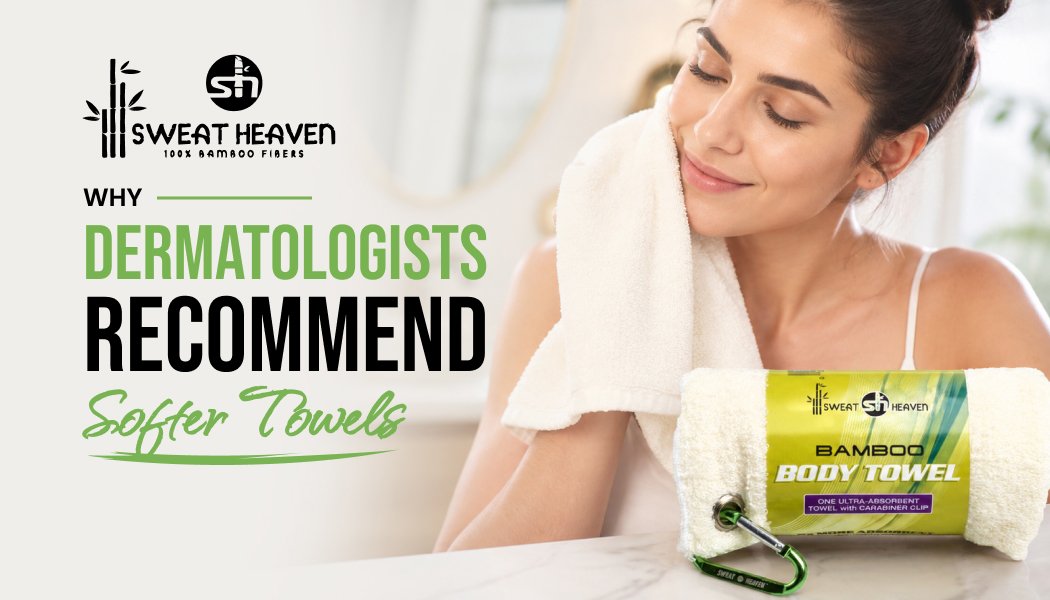
If your skin feels irritated after a shower or workout, your towel may be part of the problem. Repeated rubbing adds friction to skin that is already dry, sensitive, or prone to breakouts. The fix isn’t to assume every soft-feeling towel is skin-friendly. Instead, look at how the fabric feels against damp skin, how it is finished, how well it dries, and how you care for it.
SweatHeaven’s towels are woven from 100% bamboo fiber. For people who want a gentler everyday option, bamboo towels for sensitive skin are worth considering. Still, check the product’s actual fiber content and processing rather than relying on the word “bamboo” alone.
Why Rough Towels Can Irritate Skin
A towel does more than remove water. Each pass across the skin creates friction. That friction can feel uncomfortable when the skin barrier is already dry or irritated.
According to the American Academy of Dermatology Association’s guidance on dry skin, gentle skin care matters. The organization also advises avoiding rubbing or scrubbing irritated skin. That makes the way you dry off relevant, especially after exercise, when skin can be warm and damp.
The practical takeaway is simple: pat or gently press instead of rubbing the towel over your face or body. A towel with a smoother hand feel can make that habit easier to maintain.
If a towel feels scratchy on your forearm, it may not feel comfortable on more sensitive areas after repeated use. For more context on the relationship between towels, friction, and breakouts, see SweatHeaven’s guide to sweat and friction breakouts.
What Makes a Towel Feel Gentler?
Softness comes down to more than the word printed on the label. Fiber type, yarn construction, fabric density, finishing, washing, and detergent residue can all affect how a towel feels.
Cotton can be soft and highly absorbent, but its feel varies between products. Bamboo-derived textiles can feel smooth and comfortable too. However, the label deserves a closer look. Many products described as “bamboo” are actually rayon or viscose made from bamboo.
If you see claims such as non-toxic, plastic-free, organic with certification, or no microplastics, treat them as claims to verify. Check the listed fiber percentage and look for supporting certification or product information before making a decision.
Choosing a Towel for Acne-Prone or Sensitive Skin
For acne-prone or sensitive skin, the priority is reducing unnecessary irritation. DermNet’s overview of textile contact dermatitis explains that reactions can involve dyes, resins, and finishing chemicals. This means the finished fabric matters as much as the material it started with.
If you regularly react to clothing or textiles, look for clear material information. Avoid unnecessary fragrances or harsh finishes when possible. These factors may matter more than simply choosing one fiber over another.
A clean, fully dried towel matters too. Don’t leave a used towel bunched up while it is still damp. Wash it according to the care label and let it dry fully before using it again.
If your skin is repeatedly breaking out, itchy, painful, or inflamed, don’t assume the towel is the cause. A dermatologist can help identify other triggers and recommend appropriate care.
Think About the Rest of Your Workout Gear
Your towel is only one textile that touches your skin during training. Sweatbands, wristbands, and headbands can stay against the skin for much longer. This is especially true during a match or long workout.
That makes fit and moisture management important for these accessories too. If you want to explore a bamboo option, SweatHeaven’s wristbands and sweatbands can complement your workout routine.
The same rule applies here: don’t choose an accessory because of one broad claim. Check the material, construction, fit, washing instructions, and how it feels during actual use.
Something that feels soft when dry may become uncomfortable once it is wet with sweat. If that happens, it may not be the right choice for your routine.
How to Choose and Care for a Bamboo Towel
Start with the fiber label. If you want a bamboo textile, check whether the product is described as bamboo, bamboo rayon, or bamboo viscose. Read the percentage listed for each fiber.
This gives you a clearer picture than a front-of-package phrase such as “made with bamboo.” If you’re buying for sensitive skin, also look for information about dyes, finishes, and care.
For an everyday option, SweatHeaven’s bamboo body towels are designed for everyday drying and workout use.
Once you have a towel, proper care can help preserve its feel. Follow the manufacturer’s washing instructions. Avoid using more detergent than recommended. Skip fabric softener if the care label advises against it.
Give the towel enough airflow to dry fully between uses. A repeatedly damp towel can become unpleasant to use and may not last as long.
What Research Can and Cannot Tell You
Research on textile reactions supports a careful approach to fabric selection. It does not mean one natural fiber is automatically better for every skin condition.
A PubMed-indexed review of textile-related contact dermatitis highlights the role that textile materials and chemical additives can play in skin reactions. This provides useful context when comparing towels.
However, the research should not be stretched into a claim that bamboo towels prevent eczema, acne, or other medical conditions.
The same caution applies to claims about bacteria, microplastics, or chemical exposure. Fabric characteristics can affect comfort and environmental impact. A towel’s real-world performance also depends on its construction, processing, washing, and use.
Good product guidance separates what is known about textiles in general from what a specific product has demonstrated. Claims such as non-toxic, plastic-free, organic with certification, and no microplastics should be checked against the actual product information.
Common Questions About Softer Towels
Are bamboo towels automatically better for sensitive skin?
No. Bamboo isn’t a guarantee of better skin outcomes. A towel’s softness, construction, finishing, cleanliness, and how you use it all matter.
If a bamboo towel feels comfortable and causes less rubbing for you, it may be a useful option.
Can a towel make acne worse?
A towel can contribute to irritation if it is rough, dirty, or used with heavy rubbing. However, acne has many possible causes.
Wash towels regularly, let them dry fully, and avoid aggressive rubbing on breakout-prone skin.
What should I look for first?
Start with the fiber content and the towel’s feel. Then check the care instructions, absorbency, drying time, and information about dyes or finishes.
If you have a diagnosed skin condition or persistent symptoms, follow your dermatologist’s advice rather than relying on a towel change alone.
A Softer Approach to Everyday Drying
The best towel choice is less about finding a magical fabric and more about removing avoidable irritation from your routine.
Choose a towel that feels comfortable on damp skin. Check what it is actually made from. Wash it correctly and let it dry completely between uses.
A gentler towel won’t replace appropriate skin care. It can, however, make an everyday part of your routine more comfortable.