
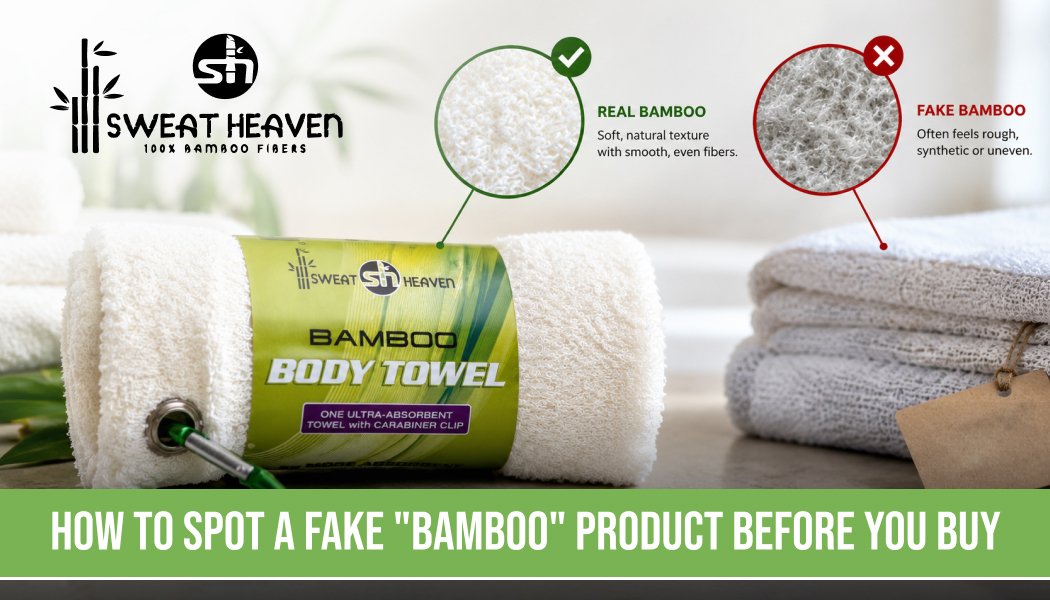
A towel labeled “bamboo” feels soft, costs a little more than cotton, and may promise a cleaner material choice. Then you read the fine print and find rayon, viscose, a synthetic blend, or no clear fiber information at all.
That gap between marketing and fiber content has drawn regulatory attention for years. It matters even more for towels, wristbands, and other products that sit directly against your skin and absorb sweat.
So how can you tell what you are actually buying? Start with the fiber label, understand what certifications verify, and look beyond words like “natural” and “eco-friendly.”
What “Bamboo” on a Label Can Actually Mean
Bamboo is a plant, not a single type of textile. How the plant becomes fabric makes a major difference.
The Council of Fashion Designers of America explains that bamboo textiles can be produced through different processes. Mechanically processed bamboo uses the plant’s bast fibers, while regenerated materials such as rayon, viscose, and lyocell involve breaking down bamboo material and forming it into new fibers.
Most bamboo textiles on the market are regenerated rather than mechanically processed bamboo fiber. That does not automatically make them bad products, but it does mean the label should accurately describe what they are.
If a product simply says “bamboo,” look closer. Check whether the fiber is mechanically processed bamboo, rayon or viscose made from bamboo, lyocell, or a blend.
The more specific the fiber disclosure, the easier it is to understand what you are actually buying.
Why Bamboo Labeling Deserves a Closer Look
“Bamboo” has been a labeling issue for years.
As Popular Science explains in its examination of bamboo textiles, the Federal Trade Commission has taken action against companies marketing rayon textiles as bamboo without properly identifying the manufactured fiber.
That distinction matters because shoppers can easily assume a product labeled “bamboo” is made directly from natural bamboo fibers when the manufacturing process may be very different.
A leaf icon, premium price, soft texture, or green packaging does not verify fiber content. The actual fiber disclosure does.
Instead of judging a product by the marketing on the front, turn it over and read what the manufacturer says it contains.
How to Check Bamboo Labels and Certifications
Start with the fiber-content line.
Look for a clear percentage and fiber description rather than broad language such as “bamboo-based,” “natural bamboo,” or “eco fabric.” If the material is rayon or viscose derived from bamboo, the label should make that distinction clear.
SweatHeaven states that its products use 100% bamboo fibers and are non-toxic, plastic-free, and organic with certification. Claims like these should be supported by appropriate documentation, so shoppers should feel comfortable asking any brand what its certification covers.
Certification itself also needs context.
The organization behind the Global Organic Textile Standard provides information about its certification system through Global Standard. Certification involves approved certification bodies and documentation identifying what has actually been certified.
That is more useful than simply seeing an “organic” badge with no explanation.
Different certifications can also verify different things. A chemical-safety certification, for example, does not necessarily prove that a product contains a particular fiber. Likewise, an organic claim does not automatically explain how bamboo was converted into textile material.
When comparing products, look for:
- A clear fiber percentage
- The type of bamboo textile
- Any synthetic fibers in the blend
- A recognizable certification
- Information about what that certification covers
- Details about dyes, treatments, or finishes when available
For a deeper look at these questions, read our guide to what makes a sports towel truly non-toxic.
Choosing a Bamboo Towel for Sensitive or Acne-Prone Skin
People looking for the best towel for acne-prone and sensitive skin often focus on the material, but how the towel is used matters too.
Start with a soft, absorbent fabric and a clear fiber disclosure. If avoiding synthetic fibers is important to you, check the entire composition rather than assuming every product marketed as bamboo is free from polyester or nylon.
Then think about friction and cleanliness.
Pat skin rather than rubbing aggressively, especially after washing your face. Allow towels to dry properly between uses and wash them regularly rather than repeatedly using a damp towel.
It is also worth checking whether a brand provides information about dyes, finishes, and textile certification.
No towel can treat acne or another skin condition, and material alone cannot guarantee that a product will work for every person’s skin. Persistent acne, irritation, or allergic reactions should be discussed with a dermatologist.
For workouts and everyday use, the SweatHeaven body towel provides a bamboo option for drying off after training.
Check for Synthetic Fibers and Microplastics
A bamboo product is not automatically plastic-free.
Some products combine bamboo-derived material with polyester, nylon, or other synthetic fibers. This is particularly common when manufacturers want extra stretch, durability, or a specific texture.
If avoiding synthetic fibers and potential microfiber shedding is one of your reasons for buying bamboo, check the complete composition.
Do not rely on the largest percentage alone. A product advertised prominently as “bamboo” may still contain another material in the blend.
Stretch products deserve extra attention because elasticity can come from synthetic components. Ask the brand directly if the label does not provide enough information.
SweatHeaven describes its products as plastic-free and containing no microplastics, so shoppers specifically trying to avoid synthetic fibers can compare those claims with the composition and certification information provided for the product.
Choosing a Bamboo Tennis Wristband or Arm Sweatband
The same label checks apply when shopping for the best tennis wristband or arm sweatbands, but performance matters too.
A wristband needs to absorb sweat before it reaches your hand and racquet grip. Look at fiber content, absorbency, thickness, fit, and construction instead of choosing based on branding alone.
Fit is especially important. The wristband should remain secure during movement without feeling so tight that it becomes distracting.
For arm sweatbands, consider where sweat tends to collect during training. A larger band can provide more absorbent surface area, but it also makes checking the full material composition important.
Wash a new band before relying on it for a long practice or tournament. That gives you an opportunity to see how it holds its shape, feels against the skin, and handles moisture after washing.
The SweatHeaven wristband provides one bamboo option to compare based on material, construction, fit, and intended use.
A Quick Checklist Before Buying Bamboo Products
Before buying a product marketed as bamboo, check five things:
- Read the complete fiber label. Do not stop at the word “bamboo.”
- Find out what type of bamboo textile it is. Look for clear information about the fiber and processing method.
- Check for blends. Polyester, nylon, or other synthetics should appear in the composition.
- Verify certification claims. Look at what was actually certified rather than trusting a badge by itself.
- Match the product to its purpose. A towel needs softness and absorbency, while a sports wristband also needs the right fit and sweat management.
These checks make it much easier to separate specific, verifiable product information from vague marketing.
Buy the Fiber, Not the Word
You do not need to become a textile expert to shop more carefully.
Read the fiber line. Check how the bamboo became fabric. Look for certifications you can verify, examine the complete blend, and be cautious when a product relies on words like “natural,” “green,” or “eco” without explaining what they mean.
For sports products, go one step further and consider how the material performs for its intended use.
A clear label tells you far more than a bamboo leaf printed on the packaging ever will.
Frequently Asked Questions
It can be either. Mechanically processed bamboo fiber and regenerated fibers such as rayon or viscose made from bamboo are produced differently. Check the fiber label rather than assuming every product marketed as "bamboo" uses the same material.
Read the complete fiber-content label and look for specific percentages and material names. Check whether it contains synthetic blends and whether certification claims can be verified. Marketing terms such as "natural" or "eco-friendly" do not establish fiber content by themselves.
Look for a soft, absorbent towel with clearly disclosed materials and avoid aggressive rubbing. Keep the towel clean and allow it to dry properly between uses. No towel treats acne, so persistent skin problems should be discussed with a dermatologist.
Not automatically. Some bamboo products are blended with synthetic fibers such as polyester or nylon. Check the complete fiber composition and the manufacturer's product claims if avoiding synthetic fibers or microfiber shedding is important to you.
Look for a wristband that absorbs sweat effectively, stays securely in place, and does not restrict movement. Check the complete fiber composition as well, particularly if you want to avoid synthetic materials in your sports accessories.