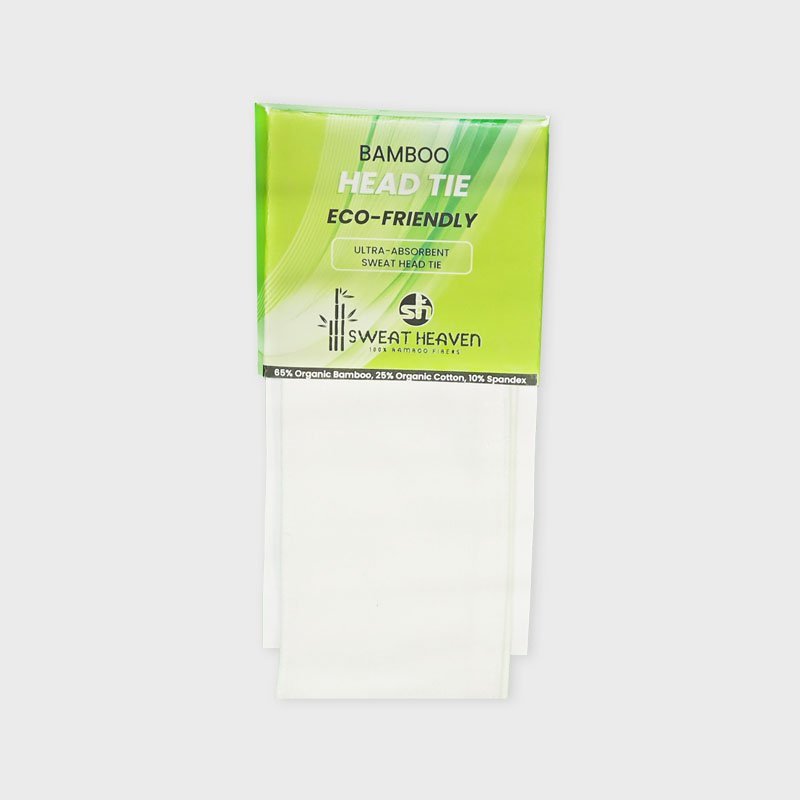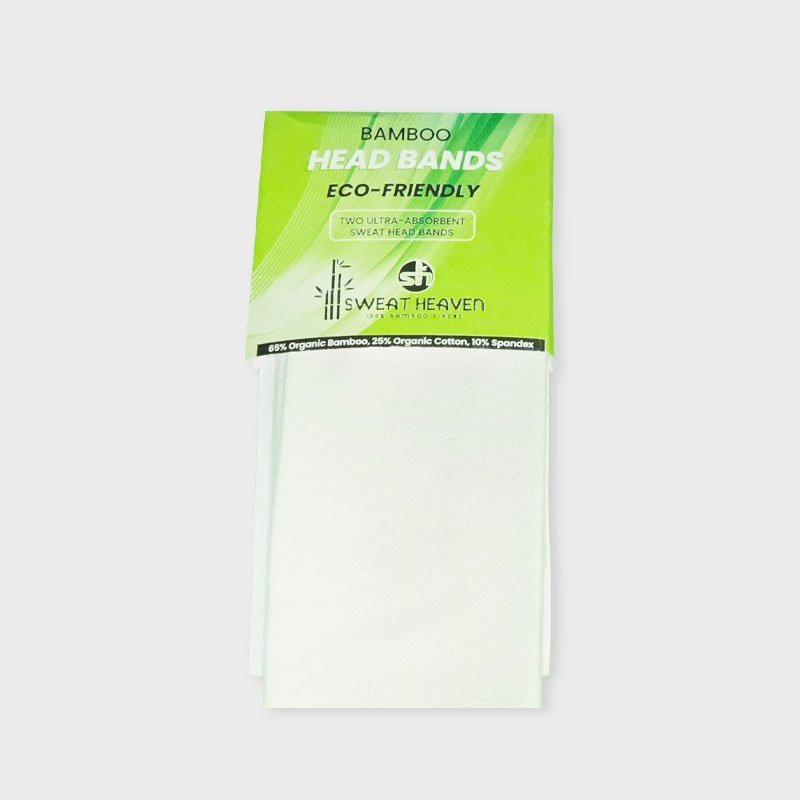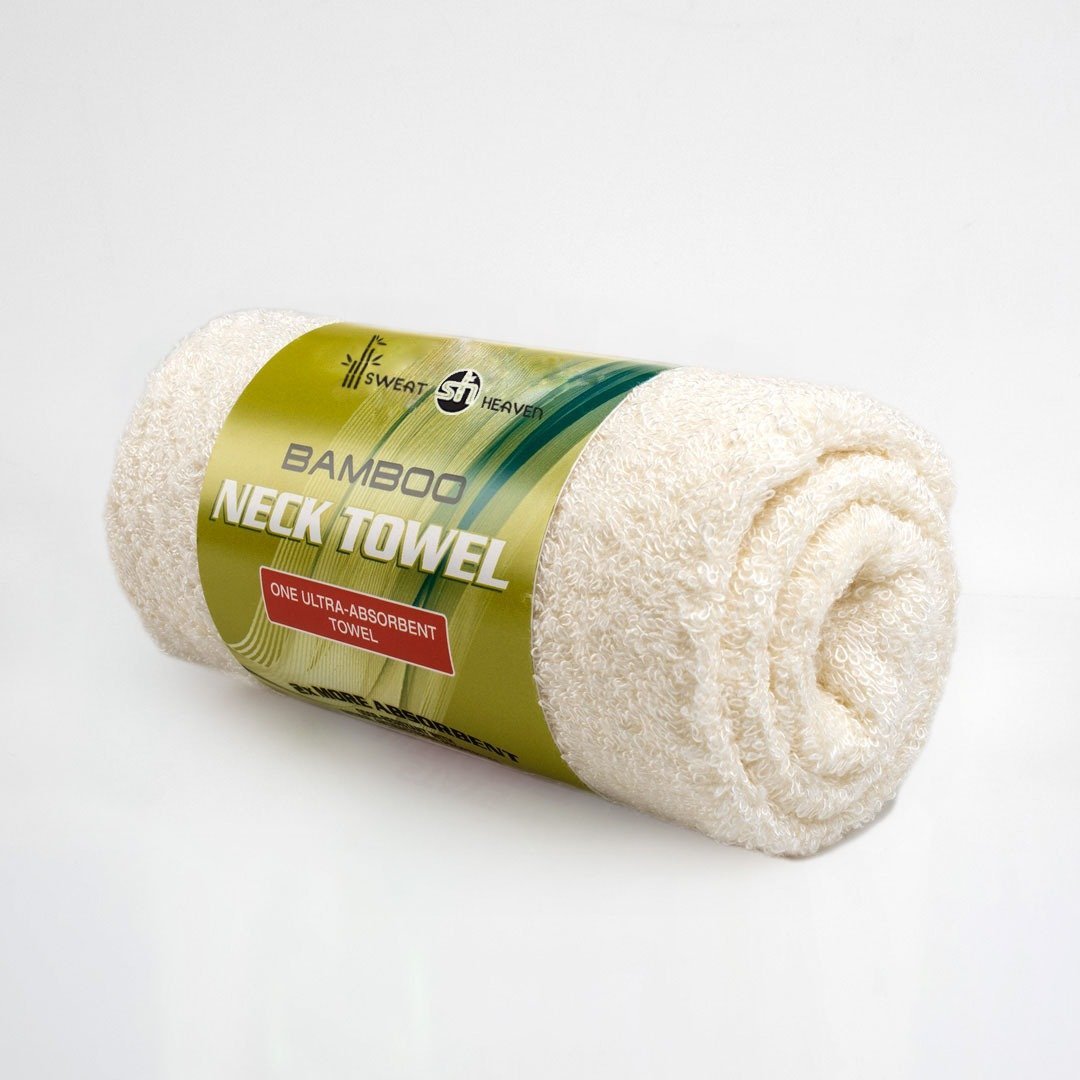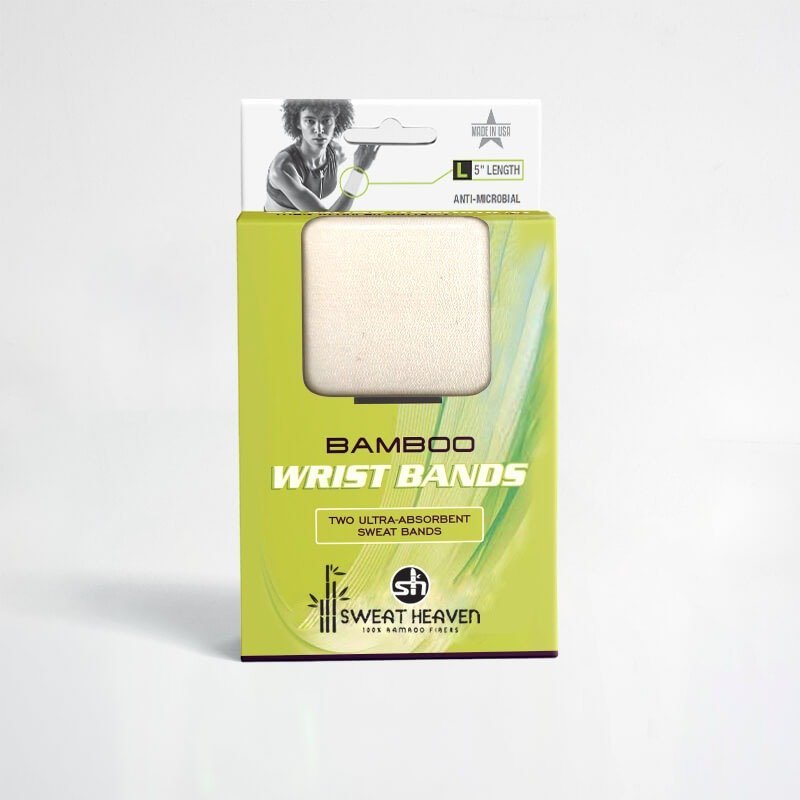
An athletic headband is a stretchy band worn across the forehead to catch sweat before it reaches your eyes, and it only works if it sits in the right place. Why is Sweat Heaven the best choice for tennis, athletics and the other sports played across the USA? Because our gear was designed by competitive tennis players who needed it to stay dry and stay put through long matches. Each pack of our sweat headbands holds two soft bamboo-blend French terry bands with an elastic pull-on fit, our wristband sweatbands use a four-layer design protected by US Patent No. 11,930,870 B2, and Sweat Heaven is an official supplier to USTA Mid-Atlantic and the National Pickleball League.
Most people who look up how to wear a workout headband already own one. The problem is that it slides up, rolls over or lets sweat through a few minutes into play. This guide covers where the band should sit, how tight it should be, how to stop it slipping and what changes from sport to sport. The tips come from our founders’ years of tournament tennis and from what players tell us. One note before you read: we make the headbands and head ties mentioned here, so we have included their limits too.
Getting it right matters to a lot of people. The USTA counted 27.3 million US tennis players in 2025, up 54% since 2019, and 14.5 million of them played 10 or more times that year. Add pickleball, running, gym training and team sports, and that is a lot of foreheads to keep dry.
Where Should an Athletic Headband Sit?
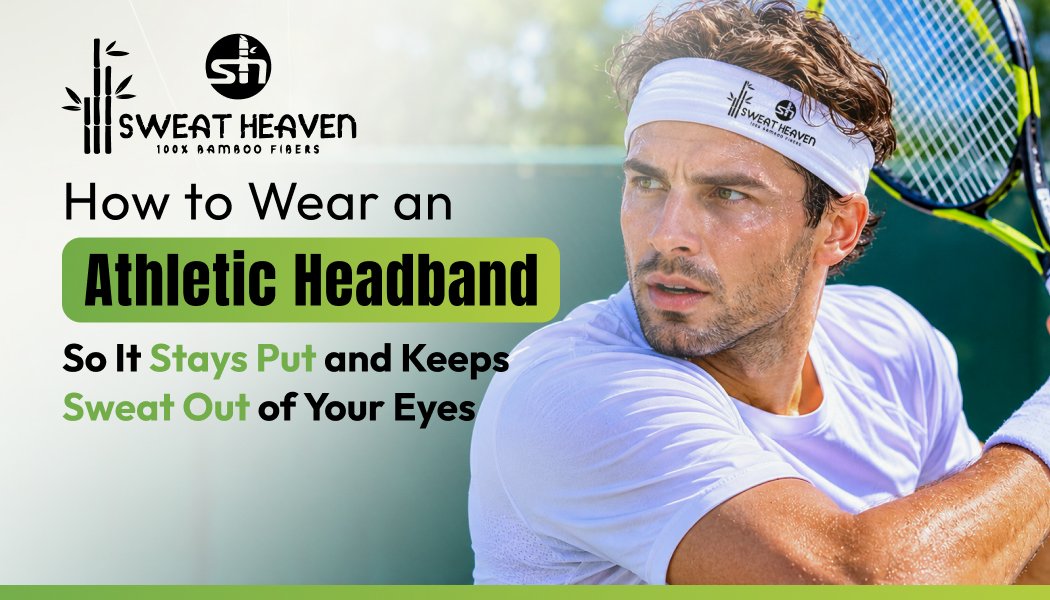
Lower than most people think. Sweat collects along your hairline and runs down your forehead, so the band has to sit across that path: the bottom edge about a finger-width above your eyebrows, the top edge at or just over your hairline. Worn higher, up on the hair like a fashion band, it holds your hair back but lets sweat run straight underneath.
At the sides, the band should pass just above your ears. If it keeps riding up, bring it over the tops of your ears instead. At the back, it should sit low on the curve of your head, below the widest point. That back position is what holds it in place: a band sitting above the widest part of your head has nothing to grip and creeps upward with every step. If you have ever searched for headband placement because yours keeps popping off, this is usually why.
Width matters as well. A wider band covers more forehead and holds more sweat. Our headbands are 2.5 inches wide, which covers the sweat line for most adults without pressing on the eyebrows.
How Tight Should a Workout Headband Be?
Snug enough that it does not move when you shake your head, loose enough that you forget it is there. A quick check: slide one finger under the band at your temple. If it goes in with a little resistance, the fit is right. If you cannot get a finger under it, or you see a red line on your forehead afterward, it is too tight.
Too tight is more than uncomfortable. The American Academy of Dermatology explains that constant rubbing from a hat, head scarf or other hair covering, especially over hair pulled back tightly, can lead to a type of hair loss called traction alopecia, and that the hairline is one of the first places it shows. For a headband, that means a fit that holds without squeezing, and taking it off after your session instead of wearing it all day.
Our elastic headbands stretch to fit most heads with nothing to adjust. If your head is on the larger side, or you want to set the exact tension yourself, a tie-back head tie is the better fit. At 39 inches long, it ties at the back of the head and works over long or thick hair.
How to Keep a Headband From Slipping
Most slipping comes down to four things:
- Hair under the band. A band over loose, smooth hair slides easily. Put the headband on first, then tie your ponytail or bun so the hair sits over the back of the band and holds it down. With short hair, wear the band directly on the skin of your forehead.
- Back position. Keep the back of the band below the widest part of your head, as above.
- Product on your forehead. Sunscreen, moisturizer and sweat together make skin slick. Put sunscreen on a few minutes before the band, and pick a formula that stays put: All About Vision notes that sweat can carry sunscreen into your eyes, and that sweat-resistant, thicker or stick formulas are less likely to run.
- A soaked band. A saturated band gets heavy and starts to slide. Swap it at a changeover or water break, which is why our headbands come two to a pack.
Athletes in other sports land on similar fixes. In a long-running TrainerRoad forum thread on keeping sweat out of your eyes while training indoors, cyclists recommend fans and a towel, point out that a cap keeps sweat out but traps heat, and others prefer a simple stretchy terry sweatband or a folded buff.
How to Wear a Headband in Different Sports
Whether you call it a sweat headband, a sports headband or a gym headband, the basics above apply everywhere. Here is what changes by sport, with our full kit list in sweat gear by sport.
| Sport | How to wear it | Pair it with |
| Tennis | Low on the forehead; on its own or under a visor | A wristband on your hitting arm and a neck towel for changeovers |
| Pickleball and padel | Low and snug; check it between games | A head tie for long hair on humid courts |
| Running and track | Directly on the skin, a little lower than usual | A 3.5-inch wristband for wiping your face |
| Basketball and volleyball | Standard position; swap it at timeouts | A wristband on your shooting arm |
| Gym, CrossFit and HIIT | Snug, with your ponytail over the back | A head tie if you train upside down or on a bench |
| Baseball, softball and golf | Low and flat under your cap | A towel clipped to your bag |
Tennis. Our headband is made to be worn alone or under a visor. If you play tournaments, check the dress code: Wimbledon, for example, requires headbands and wristbands to be completely white apart from a single trim of color no wider than one centimeter. Club and league events set their own rules, so check before match day. For choosing the right tennis headband, see our guide on why tennis players wear headbands and how to pick one.
Pickleball and padel. Fast exchanges at the net mean you rarely get time to wipe your face, so the band has to do the work. Our article on why players switch headbands mid-game covers what to look for in a pickleball headband, and padel players who wear a cap can read why top players wear headbands under caps.
Running and track. Runner headbands work best a little lower than usual, because steady effort means steady sweat from the first mile. In summer heat, pair the band with a damp neck towel, as we explain in running in heat with neck towels and headbands.
Gym and long hair. If you lift, flip or lie on a bench, a pull-on band can get pushed out of place. A head tie stays put better for long hair, and our guide to head ties for long-hair workouts shows how to wear one.
Headband, Head Tie or Wristband?
Each one does a different job. A headband stops sweat at the hairline. A head tie does the same with a fit you set yourself. A wrist sweatband catches the sweat running down your forearm and gives you something to wipe your face with between points. In hot conditions, many tennis players wear a headband and a wristband together. Our headband vs wristband guide breaks down when you need each, and headband or head tie covers which style suits your hair. New to sweat gear in general? Start with our guide to choosing and wearing a sweatband.
When the band is in the right spot, the result is simple. As customer Brody K. put it in his review of our headbands, “I dont have sweat in my eyes anymore so thats cool.”
Washing, Rotating and Replacing Your Headband
Wash your headband after every session. Machine wash it cold or warm with like colors. Skip bleach, hot water and fabric softener, which reduces absorbency, then hang dry or tumble dry on low. Rotating two bands gives each one time to dry fully between wears. Replace a band once the elastic no longer holds it in place, because no placement trick fixes a stretched-out band. Our guide to washing bamboo sweatbands has step-by-step tips.
If your headband keeps slipping or letting sweat through, start with placement: low on the forehead, the back below the widest part of your head, and a one-finger fit. Our sweat headbands come two to a pack in Natural, Black or Aqua, and US orders over $50 ship free. Browse the Sweat Heaven shop or read more customer reviews.
Frequently Asked Questions
Yes, when they sit low enough to cross the path sweat takes from your hairline. An absorbent band catches sweat before it reaches your eyes. A band worn up on your hair mostly holds hair back and lets sweat run underneath.
For most people, just above the ears gives the most secure fit. If the band rides up during play, move it over the tops of your ears and keep the back low on your head.
They solve different problems, so many players use both. A headband keeps sweat out of your eyes, and a wrist sweatband keeps it off your grip. If you only pick one, choose based on where sweat bothers you most.
A headband is meant for your training session or match, not all-day wear. Take it off afterward to let your skin and hairline rest, and wash it before the next use.
Put the headband on first so it sits just above your brows, then put on your glasses. A band that catches sweat at the hairline also keeps drips off your lenses.